

Living Creatures
not your usual happy solstice thoughts, I'm afraid

1.
One morning, as I’m collecting hay for the rabbit, I find a dead goldfinch in the polytunnel. Its tiny, still-soft body is nestled behind a bucket, curled towards the dug-out mud wall. Gently, I lift it away, not wholly sure it won’t flutter its wings into flight. I whimper, horrified by the idea that it might have somehow become trapped in here, unable to escape (we decide later that that can’t have been what happened; it must have crawled in, looking for a quiet place to die). In my gloved palm, I look closely at the streak of sunshine yellow running through its feathers, the red of its face, the characteristic frown. I take it to the edge of the garden and drop it into the forest, where I hope it might serve as sustenance for some other being.
Winter brings a different relationship between us and the birds. We submit to spending an inordinate amount on large bags of sunflower seeds, stepping out on grim mornings to fill the various tubes and houses hanging from their feeding station. If we get lazy with meeting their needs, the tits at least will let us know about it by tapping and flapping at the windows.
I’m unable to stop thinking about the goldfinch: the soft podge of its unmoving body, the delight that lined my sadness as I marvelled at the rare opportunity to view it so closely. All things die, I tell myself. Searching for significance, I stumble upon a Reddit thread from eight years ago. Money, inspiration and resurrection, it might mean. That seems like a lot of weight for such a small creature to hold.
2.
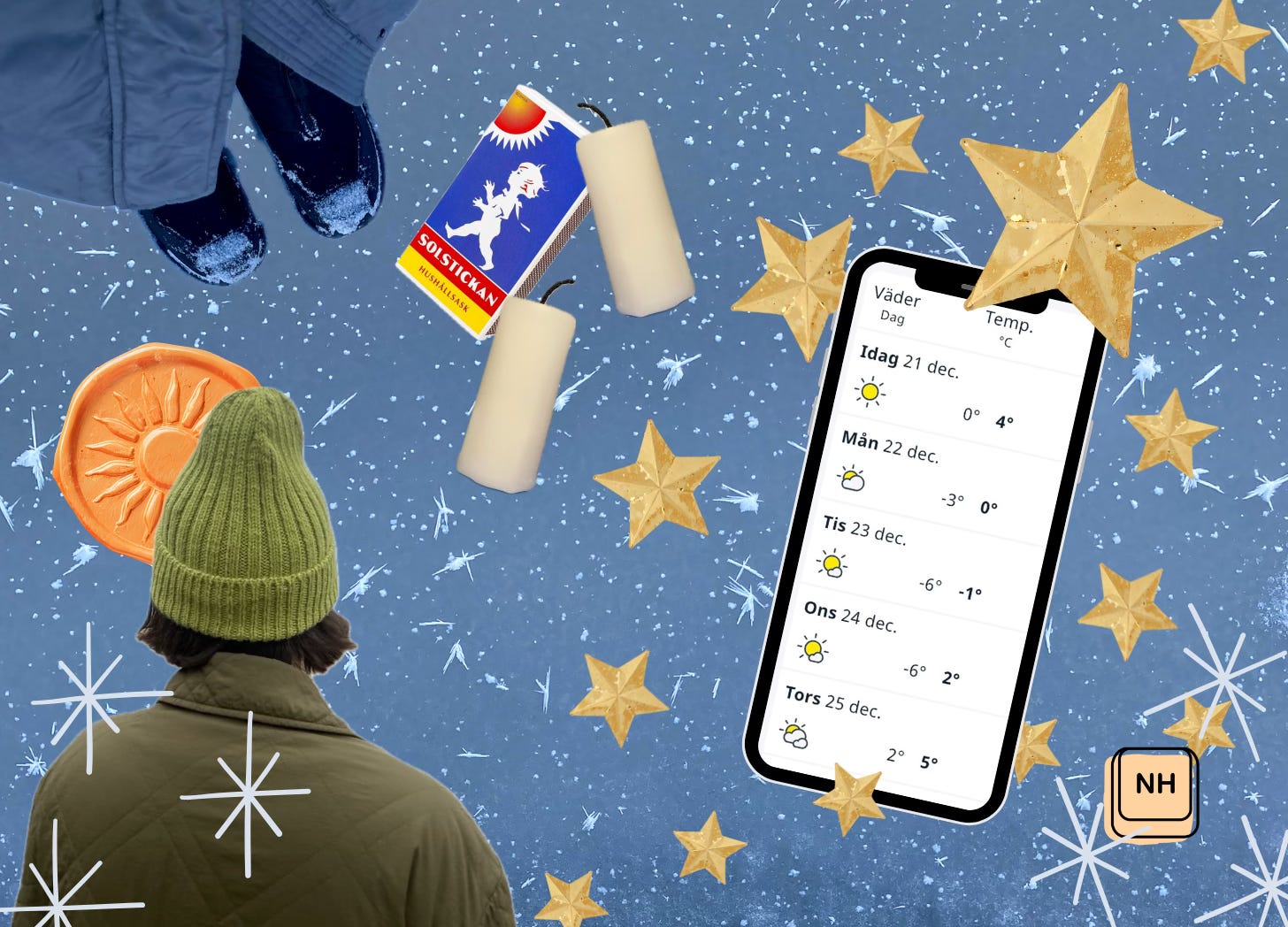
The weather is a restless lover unable to commit. Snow falls and the temperature drops a good ten degrees. The lakes start to freeze, so thickly I break my own rule to not walk on the ice before Julafton. It is the kind of cold where the moisture in your nostrils starts to freeze, and everything sparkles under a low sun. Then abnormal warmth arrives, melts everything away and replaces it with gloom and rain. Flies die and respawn in micro-seasons outside the rabbit’s hutch; we’ve normally moved her into the outhouse by now, but nothing is normal this year. Temperatures above zero in December threaten the psyche, forcing us into an unhealthy relationship with the weather app. We are reminded of our place in time, and the time of a place: when did snow settle here last year? How long until the ice thickens to hold a vehicle’s weight? People say that rowan trees put out an abundance of berries ahead of a harsh winter, extra food for the birds. When I check the branches of the one at the edge of our garden, they are bare.
3.


The muffled noise of heavy machinery carries across the night. Returning from closing up Doris’s hutch, I stand still on the doorstep. My brain converts the sound into emotionally charged images. What else could it be? The lorries have been driving back and forth through the village all week several times a day, their open backs laden with trees. Back inside, we open the app where, on a map, the forest company has carved out the parcels of woodland due to be logged. We localise the source of the sound to two possible locations.
Clearcuts are like diseased patches of skin which have been peeled away from the surface of a body. Only they aren’t sick; they’re valuable. Value, I am learning, means very different things to different people.
4.
Going to feed a neighbour’s cat, we find a strange man in camouflage clothing holding a gun in the garden. Another man is stood nearby, gesturing towards an outbuilding and back towards his associate. It’s obvious they’re hunters, this being hunting season, but it’s less clear what they’re doing in a private garden. I’m shaking as I approach them and ask the man with the gun if he speaks English. He looks younger than I am and is wearing a cap with a fox patch sewn onto it. He tells me there’s an injured fox under the house that they’ve been called to deal with. I tell him I didn’t know there was a fox hunt here; he tells me about scabies and inbreeding. It is unclear what has happened to the fox, whether its injuries were inflicted by disease or gunfire. Later, we hear that they never did manage to coax it out.
Hunting animals is both nationally controversial and culturally embedded. Spring ends with the popular televised moose migration as the animals make the annual journey to their summer pastures; not even six months later, they’re being shot in alarming numbers. Forestry companies owned either by the state or private billionaires incentivise increased hunting under the guise of property damage and under the threat to remove hunters’ licences if they don’t comply.
Driving north, we pass small wooden structures by the side of the road, hunters’ hides. I joke about taking an axe to them, leaving a pile of firewood in their place, though I know I won’t, I can’t.
5.
We bore ourselves complaining about how dark it is. The light over the kitchen table stops working, so we take our breakfasts by candlelight. Striking a match is a tactile affectation that makes something elemental ritualistic.
Me: I read that Stockholm has had the darkest December since the 1930s.
S: Politically?
This time next year, Sweden will have voted in a new government. My citizenship application, which must be approved if I am to be able to vote in the election, has been languishing in the migration agency for nearly three years. Legally questionable, unquestionably political interference on the part of the coalition government has effectively halted the approval of citizenship applications in a mass disenfranchisement. It has begun to feel more rational than paranoid to be cautious of how critically I talk about all this online.
Some mornings, the darkness is so obvious and complete it goes without mention.
Every morning, the sun rises a minute earlier than the last.
The solstice reminds us that the darkest days are followed by light.
6.


Snow changes the sensory dimension of a place. It reflects light from the moon and the streetlamps; it dampens sound and, if the temperature falls with it, brings dry air. A snowless December smells like spring and looks like autumn. The struggling face of the earth has no blanket under which to hide its indecision. The lake freezes, then melts; the ground hardens, then thaws. Sometimes, the uncertainty unnerves me; on other days, I appreciate nature’s flexibility, the ease with which it can be more than one thing, almost simultaneously.
I think often about what it means to be various. To be from more than one place; to no longer want things I once thought I did want; to laugh through personal and existential pain. That I can think and feel so differently to how others think and feel. That there is so much death and yet still life; that there can be both despair and hope. That there can be darkness and also light, and that we living creatures can and do feel them both.